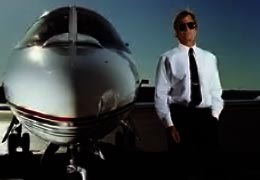
What is a Night Rating License?
A Night Rating affords the competent Private Pilot the chance to conduct operations at night. It effectively increases the versatility and skill of the pilot as flying at night requires comprehensive judgment to conduct a flight safely and effectively. It is a requirement for the aspiring Commercial Pilot to have a Night Rating and it’s also the practical second step to take towards their Commercial License.
back to top
What are the requirements?
- Must hold a valid Student Pilot License on an integrated course or hold a valid Private Pilot License
- Must have 5 hours of theoretical training
- Must have 10 hours dual instrument flight instruction (5 hours may have been completed in an approved FSTD)
- Must have completed 5 take-offs and landings by night
- Night cross country of at least 150nm and including two full stop landings at different aerodromes
Exams you must pass:
back to top
What are the costs?
5 Dual Instrument hours on PA28-161@ R3990.00 per hour (actual 6.5 hours)
5 Dual Instrument hours on FSTD @ R1350.00 per hour 3.5 Dual hours night cross country flying on PA28-161 @ R3990.00 per hour
1.5 Dual hours on PA28-161@ R3990.00
5 briefings @ R550.00 per briefing
|
= R 19,950.00
= R 6,750.00
= R 13,965.00
= R 5,985.00
= R 2,750.00 |
|
|
Grand Total for Night Rating |
= R49,400.00 |
| |
|
Additonal costs
CAA fees
Exam |
= R 471.00
= R 650.00 |
back to top
Break-down of the exercises for Night Rating course:
Excercise |
Description |
1 |
Intro to instruments
Reference of visual to instrument indications
Basic altitudes & changes
Human performance – false senses
Scanning |
| |
|
2 |
Instrument checks during taxing
Straight and level at various speeds
Climbing and descending
Level turns at 30 deg. |
| |
|
3 |
Basic departure and clearance
Level turns onto specific headings
Climbing and descending turns
Steep turns
Intro into timed turns |
| |
|
4 |
Timed turns
Timed climb’s and descents
Intro to stalling |
| |
|
5 |
Instrument take-off
Timed turns
Stalling
Unusual altitudes
Simulated radar vectoring to final |
| |
|
6 |
Limited panel
Turns on the compass
Timed turns
Unusual attitudes
Stalling |
| |
|
7 |
Recap limited panel
Incipient spin
Combined climb, descend and timed turns |
| |
|
8 |
Simulated patterns
Intro to QDM’s & QDR’s |
| |
|
9 |
QDM’s & QDR’s
Intro into VOR Radials |
| |
|
10 |
Navigation at night |
back to top
Terms: Due to practical consideration such as; weather, aircraft availability and serviceability, instructor availability and the progress of individual students, completion of any particular course may require more time and funding than specified in this quotation. The company reserves the right to terminate or suspend the flight training of any student at any time and will in such case, refund the student all funds in credit in that students account. Prices are subject to change at any time due to fluctuating fuel and other related costs. Flight training shall not be conducted whilst in possession of any weapons.
Please be advised this is only an estimated cost based on the MINIMUM requirements and that the total cost shall be based on student performance. |